Do laser caps work? They can help with pattern hair loss: pooled trials show more hair density with low-level laser devices than with sham devices. They suit early to moderate thinning, need several sessions a week, and take four to six months or more to show. They are not designed for sudden or patchy hair loss, and they do not help scarring hair loss.
We did not wear or test a laser cap for this guide. We read the main clinical trials and meta-analyses on PubMed, five FDA 510(k) files for laser hair devices, and guidance from the American Academy of Dermatology and an academic dermatology clinic, then compared them.
Yes, for many people with pattern hair loss. Several meta-analyses of randomized trials found that low-level laser devices increased hair density more than sham devices, in both men and women. Results vary a lot between people, take at least four to six months, and work best while follicles are still active.
How does a laser cap work?
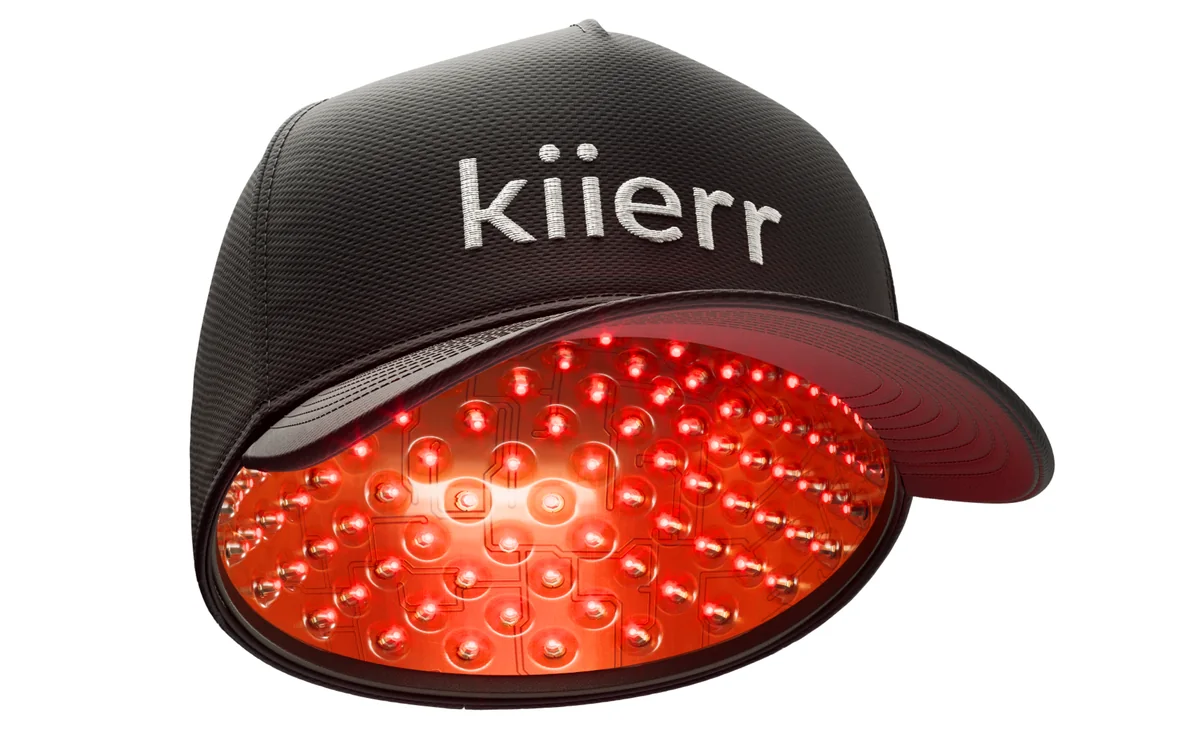
A laser cap holds dozens to hundreds of small red laser diodes on the inside of a hat or helmet. The light is low power, so it does not heat or cut the skin. Doctors call this low-level laser therapy (LLLT) or photobiomodulation.
The exact mechanism is still being studied. A 2014 review in Lasers in Surgery and Medicine describes the leading idea: red light acts on the energy centers (mitochondria) of follicle cells and pushes resting follicles back into the growth phase. That is why laser caps aim at thinning hair, not at areas that have been bald for years.
Do laser caps work, according to the research?
The research on laser hair devices as a group is positive. A 2019 meta-analysis of 11 double-blind trials found more hair density with low-level laser devices than with sham devices, in men and women and with both combs and helmets. A 2025 review of 38 studies and 3,098 patients called the approach promising for pattern hair loss.
The largest single trial tested a laser comb in 269 men and women, three times a week for 26 weeks. In the 2014 multicenter trial, terminal hair counts rose by 18.4 to 25.7 hairs per square centimeter with the laser, compared with 1.6 to 9.4 with the sham device.
| Study | What it covered | Main finding |
|---|---|---|
| Liu et al., 2019 | 11 double-blind trials | More hair density than sham in men and women |
| Gupta and Carviel, 2021 | 15 studies, 795 people | Laser-only devices did better than laser plus LED |
| Perez et al., 2025 | 38 studies, 3,098 patients | Larger gains after 20 weeks than before |
| Alahmadi et al., 2026 | 37 studies, 3,298 patients | 18.56 more hairs per cm² than sham, pooled |
| Jimenez et al., 2014 | 269 people, laser comb, 26 weeks | 18.4 to 25.7 more hairs per cm² from baseline |
Two limits are worth knowing. Results differ widely from trial to trial, and a 2022 network meta-analysis rated the quality of the evidence as low. The largest trial was also partly funded by the company that makes the HairMax comb, so independent trials still matter.
A 2016 Cochrane review of laser combs in women adds one more detail. Hair counts rose more than with sham, but the women did not rate their own hair as clearly better.
Who are laser caps for?
Laser caps are meant for androgenetic alopecia, the common hereditary thinning seen in male and female pattern hair loss. Laser devices seem to work best on follicles that are still active.
The five FDA files we read for laser hair devices (Kiierr, iRestore, illumiflow, Capillus and HairMax) all cover men at Norwood-Hamilton stages IIa to V, women at Ludwig-Savin stages I to II, and skin types I to IV on the Fitzpatrick scale. Two of them also list frontal thinning in women.
- have gradual thinning at the crown, part line or temples
- still have fine hair in the thinning areas
- can keep a routine of several sessions a week for six months or more
- are losing hair suddenly or in patches (see a dermatologist first)
- have scarring or inflamed scalp hair loss (laser devices do not help these, according to a Nebraska Medicine dermatologist)
- have areas that have been smooth and bald for many years
What does "FDA cleared" mean for a laser cap?
Most laser caps reach the US market through a 510(k) premarket notification. The maker shows that its device is "substantially equivalent" to one already legally sold, called the predicate. When the FDA agrees, the device is cleared.
Cleared is not the same as approved: FDA rules (21 CFR 807.97) say a 510(k) clearance does not mean official approval. The first device under this product code, the HairMax LaserComb, was cleared in January 2007 (K060305). As of October 12, 2026, openFDA lists 114 clearances under that code.
Because clearance rests on equivalence, a new cap does not always need its own clinical trial. Most caps on the market were cleared by comparison with an earlier cleared cap, which is the normal route for this type of device. The clinical evidence comes from the trials above, and our best laser caps guide shows how specific caps compare.
How long do laser caps take to work?
Plan on four to six months before you judge a laser cap. Most trials ran 16 to 26 weeks, and the 2025 review found larger gains after 20 weeks than before. The American Academy of Dermatology says a laser takes several sessions a week "for many months" to show a bit of growth.
Laser caps are an ongoing routine: the FDA files for Capillus and illumiflow describe use with no end date. Take photos of your part line and crown every month, in the same light, so you can see slow changes.
How often should you use a laser cap?
Follow the schedule for your own device, because cleared schedules differ. In the FDA files we read, they range from 6 minutes a day (CapillusX) and 12 minutes a day (iRestore Elite) to 30 minutes every other day (Kiierr 148 and 272, illumiflow 148).
More is not better. The 2019 meta-analysis found that trials with fewer sessions a week showed larger gains than trials with more frequent sessions. What the trials share is a steady schedule kept for months, so consistency matters most.
Are laser caps safe?
Studies report few, mild side effects. In the 2014 laser comb trial, nobody had a serious side effect or stopped early, and reported effects were dry skin (5.1%), itching (2.5%), and scalp tenderness, irritation or warmth (1.3% each). Two 16-week helmet trials reported none.
Long-term safety is less studied. The American Academy of Dermatology notes that more research is needed on long-term side effects. The caps in the FDA files we read use Class 3R lasers, which the FDA says can be hazardous if you stare straight into the beam, so turn the cap on only once it is on your head.
Ask your doctor before using a laser cap if you are pregnant, take medicine that makes your skin sensitive to light, have a scalp skin condition, or have epilepsy or other light-triggered conditions.
Laser or LED: does it matter?
Both lasers and LEDs give off red light, but lasers send it in a narrow, focused beam. In the 2021 meta-analysis, laser-only devices did better than devices mixing lasers and LEDs, though both beat control devices. A 2014 review lists the best wavelength and light type as open questions.
LED-only devices can be cleared too, such as the REVIAN RED cap (K173729, 2018). If you are weighing a laser-only cap against a laser plus LED helmet, the laser-only result is a reasonable tiebreaker. Our Kiierr review covers one laser-only cap in detail.
Cap, comb or helmet: which style is best?
The style matters less than steady use. The 2021 meta-analysis found no significant difference between combs and helmet or cap devices.
- Caps are hands-free and look like an everyday hat, so you can wear one while doing other things.
- Combs are handheld, so you move the device slowly across your scalp, section by section.
- Helmets are hands-free and bulkier, and some mix lasers with LEDs.
If you are deciding between two similar caps, our Kiierr vs Illumiflow comparison sets two laser-only caps side by side.
How do laser caps compare with minoxidil and finasteride?
Minoxidil (applied to the scalp) and finasteride (a daily pill for men) are FDA approved drugs for pattern hair loss. A 2017 meta-analysis in the Journal of the American Academy of Dermatology found that minoxidil, finasteride and laser therapy all beat placebo in men. The American Academy of Dermatology says minoxidil usually takes 6 to 12 months to show results, and finasteride about 4 months.
Head-to-head rankings are less certain. A 2022 network meta-analysis placed laser therapy near the top for both men and women, but rated the evidence for the top options as low quality. Laser caps and these drugs can also be used together: a 2025 meta-analysis of 7 trials found more hair density with laser plus minoxidil than with minoxidil alone, with no difference in side effects.
A dermatologist can help you weigh these options against your type of hair loss and your health.
When should you see a dermatologist?
The American Academy of Dermatology says effective care for hair loss begins with finding the cause. See a board-certified dermatologist before you buy a laser cap if:
- your hair loss started suddenly, or comes out in patches or clumps,
- your scalp is red, scaly, itchy or painful,
- the loss began after a major illness, surgery, childbirth or cancer care,
- you are not sure your thinning is pattern hair loss,
- your skin type is V or VI, which the FDA files we read do not cover.
Laser cap FAQ
Do laser caps really grow hair back?
Laser caps can increase hair density in pattern hair loss. Meta-analyses of randomized trials found more hair with laser devices than with sham devices, in men and women. Results vary widely, and thinning areas respond better than long-bald ones.
How long does it take for a laser cap to work?
Most people need four to six months of steady use before they can judge a laser cap. Clinical trials ran 16 to 26 weeks, and a 2025 review found larger gains after 20 weeks than before.
Are laser caps FDA approved?
No. Laser caps are FDA cleared through the 510(k) process, which means the FDA found them substantially equivalent to a device already on the market. Clearance is a different pathway from approval, and FDA rules say it does not mean official approval.
Can women use laser caps?
Yes. The FDA clearances we read cover women with pattern hair loss at Ludwig-Savin stages I to II, and trials found gains in women as well as men. Women with sudden or patchy hair loss should see a dermatologist first.
Are laser caps better than minoxidil?
There is no clear winner. Both beat placebo in trials, and one 2022 analysis ranked laser therapy highly but rated the evidence as low quality. A 2025 meta-analysis found laser plus minoxidil gave more hair density than minoxidil alone.
What happens if you stop using a laser cap?
Long-term data are limited. FDA files for several caps describe ongoing use with no end date, and the American Academy of Dermatology says more research is needed on long-term results. Plan on a laser cap as a lasting routine.
Sources
- Liu et al., Lasers in Medical Science, 2019: meta-analysis of low-level laser therapy for androgenetic alopecia (11 double-blind trials)
- Gupta and Carviel, Journal of Dermatological Treatment, 2021: meta-analysis of photobiomodulation for androgenetic alopecia
- Perez et al., Dermatologic Surgery, 2025: systematic review and meta-analysis of low-level laser and LED therapy in alopecia
- Alahmadi et al., Skin Appendage Disorders, 2026: lasers and energy-based devices for androgenetic alopecia, systematic review and meta-analysis
- Jimenez et al., American Journal of Clinical Dermatology, 2014: multicenter, randomized, sham-controlled trial of a laser comb in men and women
Show 7 more sources
- Lanzafame et al., Lasers in Surgery and Medicine: randomized trials of a red light helmet in men (2013) and in women (2014)
- Earlier reviews: Cochrane, 2016, female pattern hair loss; Adil and Godwin, JAAD, 2017; Gupta et al., 2022, network meta-analyses of non-surgical options; Avci et al., 2014, review of low-level laser therapy
- Mawu et al., Lasers in Medical Science, 2025: low-level laser therapy plus minoxidil vs minoxidil alone
- Dermatologist guidance: American Academy of Dermatology, hair loss diagnosis and treatment; Nebraska Medicine, Do laser caps work for hair growth? (March 31, 2026)
- FDA rules: Premarket Notification 510(k); 21 CFR 807.97, misbranding by reference to premarket notification; laser products and laser hazard classes
- FDA 510(k) files: K060305 HairMax LaserComb (2007), K181878 Kiierr 148 and 272, K222081 iRestore Elite, K173843 illumiflow 148, K192012 CapillusX and CapillusX+, K180885 HairMax Laser 272, 202 and 80, K173729 REVIAN RED
- openFDA: 510(k) records under product code OAP